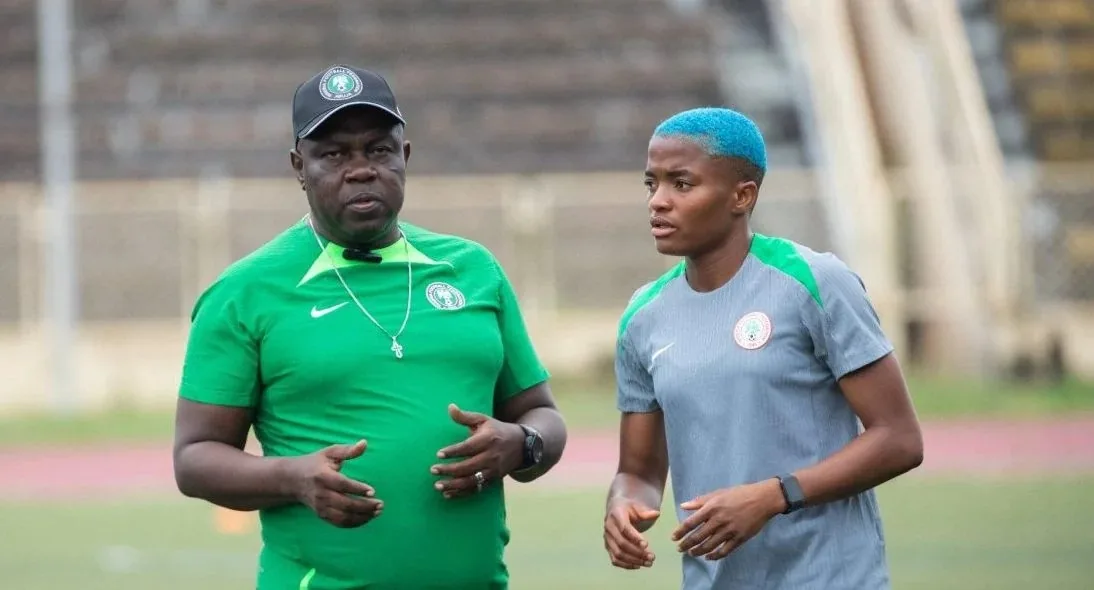
Madugu on managing criticism
Super Falcons head coach Justin Madugu has stated that criticism is an unavoidable part of his role. He emphasised his focus on improving the team and not allowing external opinions to influence his decisions. Madugu acknowledged that supporters, journalists, and other observers are entitled to their interpretations of the team’s performances.
Madugu noted that he cannot prevent criticism, explaining that it is the nature of the job to not please everyone. He added that people view the game from different perspectives and have their own interpretations. The coach also mentioned that he does not blame individuals for their criticism, as they are entitled to their opinions.
Instead of dismissing negative feedback, Madugu suggested that coaches should examine it for useful insights that could help the team improve. He stated that even from negative criticisms, one can identify positive aspects to consider. Madugu also acknowledged that coaches, like all human beings, can make mistakes and should take responsibility to improve.
He described coaching as a “thankless job,” noting that even players who are not in the starting lineup may be unhappy with his decisions. Madugu highlighted that scrutiny comes from various sources, including employers, friends, the media, and fans. He believes coaches must learn to live with this aspect of the job, focus on the positives, and strive to do their best.
Madugu rejected the idea that he or his coaching staff would intentionally make decisions that could jeopardise the team’s success. He asserted that everyone involved benefits when the Super Falcons win. He also urged supporters to be patient with players, as even those in good form can have an off day, and it is important to find solutions rather than crucify a player for one performance.
Squad rotation and preparation
Coach Justin Madugu has explained his squad rotation policy during the 2026 Women’s Africa Cup of Nations (WAFCON), indicating that effective player management is essential for maintaining Nigeria’s performance. He noted that the Super Falcons could play six matches in the tournament, necessitating careful management of players to keep them physically and mentally prepared.
Madugu mentioned that the coaching staff communicates with players who have not featured prominently, ensuring they are ready to step in when needed. He stressed the importance of being in touch with every team member to ensure they are prepared not only physically but also mentally and psychologically for any opportunity during the competition. He anticipates that all players will have a chance to showcase their abilities.
The coach highlighted that having multiple quality options creates a “good headache” for the coaching staff, making selection decisions more challenging. He stated that with the current group of players, the staff often has to discuss and analyse various factors before deciding on the lineup. This process involves considering who can link with players like Oshoala, who can provide defensive cover, and who can break down a low block.
Some observations suggest that the team’s preparation before the tournament was poor, leading to the coach experimenting with lineups during matches. This is seen in the use of three different lineups in the first three games. The coach is reportedly using the tournament to find his best starting eleven due to insufficient preparation time beforehand.
The situation with Esther Okoronkwo, who is returning from injury, has also been a point of discussion. While she is recognised for her quality, her return from injury means building rhythm gradually, sometimes from the bench. Coaches consider training data, recovery markers, and tactical matchups to protect players, even if fans might prefer them to start. The goal is to win and qualify, not necessarily to start 11 star players.
The competition in African women’s football has intensified, with teams like Cameroon, Zambia, South Africa, and Morocco becoming more professional, with improved structures, data, and players in Europe. This means that the days of easily progressing through group stages are over, and the WAFCON is now a more challenging contest. The upcoming quarter-final against Cameroon is crucial, with a World Cup ticket at stake.
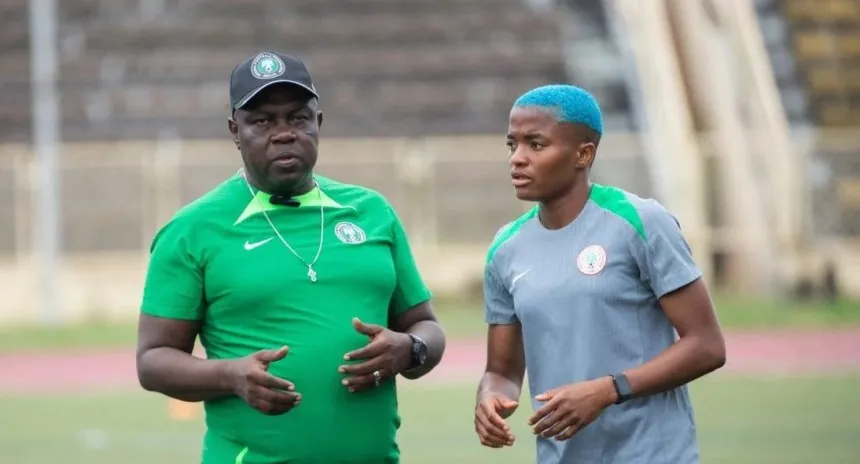
Madugu has been navigating a situation where he inherited a team without proper build-up, faces high fan expectations, and competes against opponents who no longer fear the Super Falcons. Despite these challenges, the team remains in contention. The focus for the team now is on ruthlessness in front of goal, taking half-chances, and the midfield controlling the tempo. These are aspects that involve both coaching and player execution, and Esther Okoronkwo is expected to play a role, whether starting or coming on later in the match.
The coach’s approach is aimed at sustaining the team’s performance and ensuring that player selection does not compromise standards. The Super Falcons are currently in the quarter-finals and will face the Lionesses of Cameroon for a spot in the semi-finals and an automatic World Cup ticket.
Source: vanguardngr.com