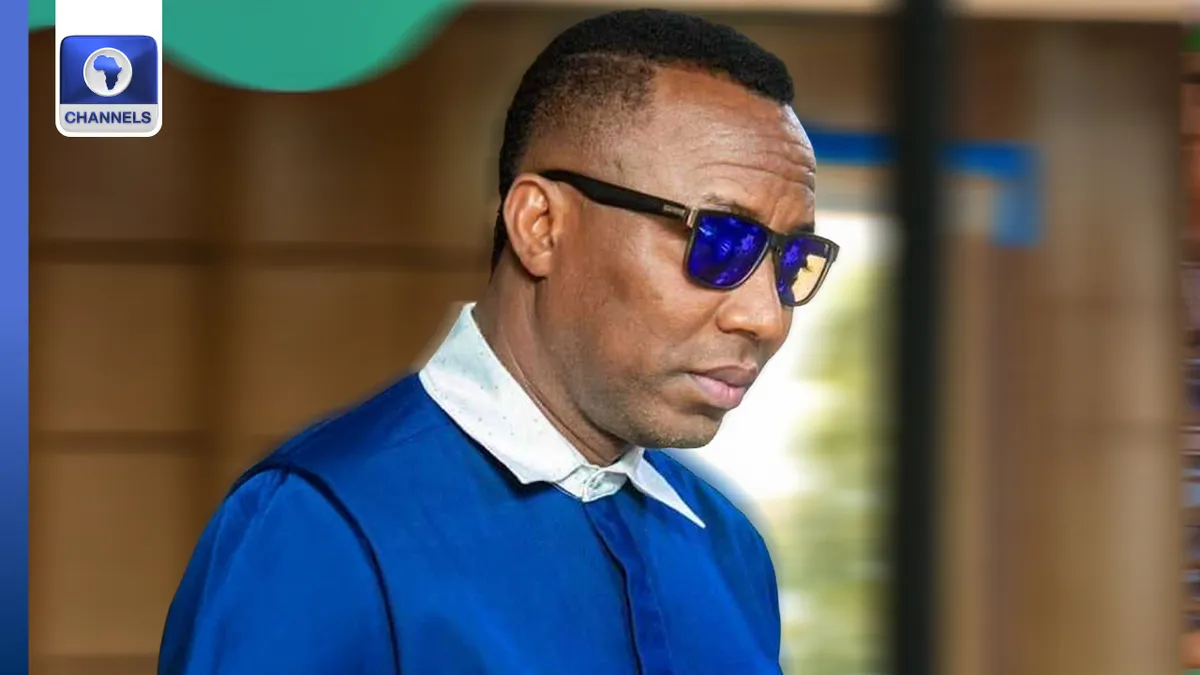
What happens when a public figure challenges the actions of a social media giant and a government agency? In the case of Omoyele Sowore, a Federal High Court in Abuja has answered that question by dismissing his fundamental rights enforcement suit against the Department of State Services (DSS), its Director General, and Meta Platforms Incorporated.
Sowore’s legal action stemmed from the deletion of a Facebook post he made on August 26, 2025, in which he referred to President Bola Tinubu as a ‘criminal.’ He claimed that Meta’s decision to take down the post and deactivate his Facebook account violated his rights to fair hearing, freedom of expression, and association. However, the court found Sowore’s claims to be without merit.
Justice Mohammed Umar presided over the case and concluded that Sowore’s allegations did not pertain to fair hearing as defined under the fundamental rights enforcement procedure. He stated, “The law is that, to seek to enforce the fundamental right to fair hearing provided under Chapter Four of the 1999 Constitution (as amended), the alleged violation must relate to proceedings before a court or tribunal established by law.” This ruling emphasizes the legal boundaries surrounding freedom of expression, particularly when it concerns the rights and reputations of others.
In addition to dismissing Sowore’s suit, the court awarded costs amounting to N1.5 million against him, with N500,000 allocated to each of the three respondents. Justice Umar remarked that while freedom of expression is a fundamental right, it is not absolute and can be curtailed to protect the rights and reputation of others. He further noted that Sowore’s complaint did not amount to violations of his constitutional rights under Sections 39 and 40.
The ruling has sparked discussions about the balance between freedom of expression and the protection of individual reputations in Nigeria. Sowore’s post and subsequent legal action highlight the contentious relationship between public figures and social media platforms, particularly regarding the content that can be shared without repercussions.
In a related development, Sowore faced criticism from a social media personality known as VeryDarkMan, who warned him against the unauthorized use of his identity and threatened legal action. VeryDarkMan expressed disappointment that Sowore publicly condemned the incarceration of an individual named Blord instead of addressing the matter privately, indicating the complexities of public discourse in the digital age.
As the legal landscape continues to evolve in Nigeria, the implications of this ruling may resonate beyond Sowore’s case, influencing how individuals navigate their rights to free speech and the responsibilities that come with it. The court’s decision underscores the ongoing debate about the limits of expression, especially in politically charged environments.
Details remain unconfirmed regarding any potential appeals Sowore may pursue following this ruling. The outcome of this case could set a precedent for future disputes involving social media content and governmental oversight in Nigeria.