The numbers
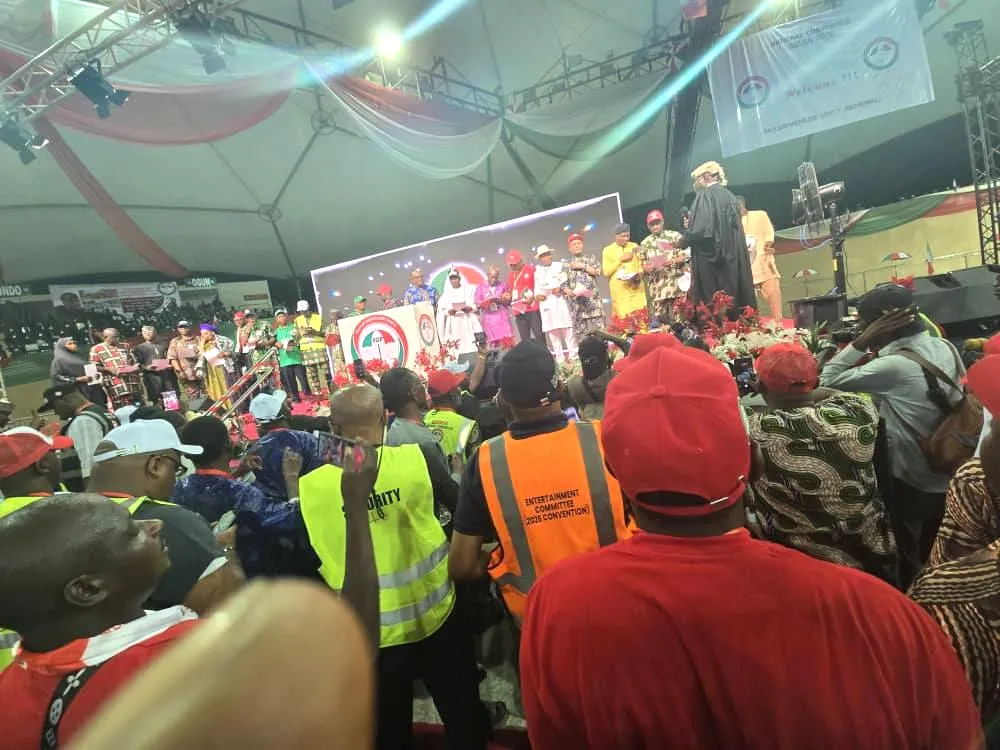
The recent PDP convention, held on March 29, 2026, at the Moshood Abiola Stadium in Abuja, saw Abdulrahman Mohammed re-elected as the National Chairman of the party through a consensus arrangement. The event was attended by over 2,000 delegates representing all 36 states and the Federal Capital Territory, who endorsed the newly formed National Working Committee (NWC), which comprises 22 members.
The convention was organized by a faction of the PDP loyal to Nyesom Wike, amidst ongoing internal divisions within the party. The election process was initiated by a motion from Kingsley Chinda, which was seconded by Usman Ahmed. Additionally, Kogi Central Senator Natasha Akpoti-Uduaghan moved a motion for the dissolution of the former NWC, signaling a significant shift in the party’s leadership structure.
Despite the successful conduct of the convention, tensions remain as another faction led by Kabiru Turaki approached the Supreme Court to restrain Wike’s faction from proceeding with the convention. This legal challenge reflects the ongoing struggles within the PDP, which has been divided into factions, leading to internal conflicts and legal disputes.
In his remarks, Abdulrahman Mohammed emphasized the need for unity within the party, stating, “Today, we choose a higher path. We choose inclusiveness ova exclusion, unity over division, we choose renewal ova decline.” His comments highlight the party’s aim to heal divisions and move forward in preparation for the upcoming 2027 elections.
Nyesom Wike also addressed the delegates, assuring them that the PDP is ready to contest the next elections. He stated, “So many pipo hia don tok, Saraki, Abba Moro don tok. Dem dey ask, ‘PDP go contest di 2027 election so?'” Wike further elaborated on the party’s zoning arrangements, indicating that the presidency is zoned to the South while the chairmanship is allocated to the North.
The new NWC is expected to focus on reconciliation efforts within the party, which has faced significant challenges since losing power in Nigeria from 1999 to 2015. The leadership transition marks a critical moment for the PDP as it seeks to regain its footing in the political landscape.
As the party navigates these changes, observers are keenly watching how the new leadership will address the existing divisions and whether they can effectively unify the party ahead of the 2027 elections. Details remain unconfirmed regarding the specific strategies that will be implemented to achieve this goal.