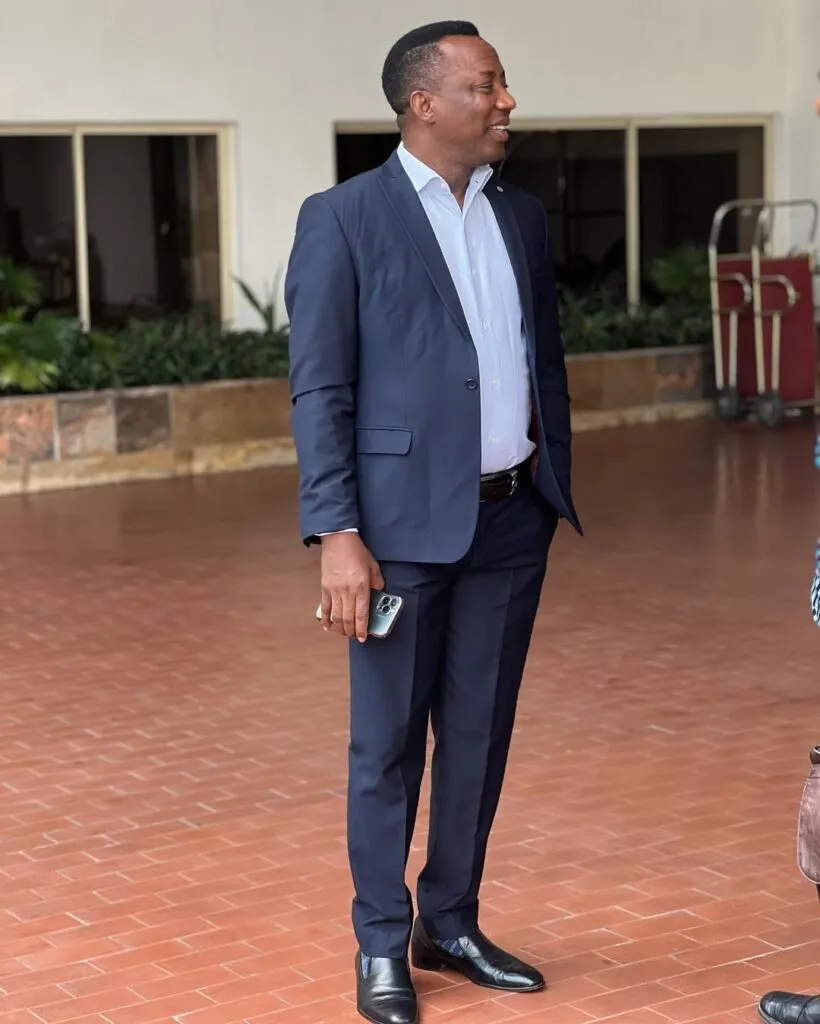
What does the recent court order involving Omoyele Sowore reveal about the state of justice in Nigeria? The order, which required Sowore’s lawyer, Marshall Abubakar, to kneel during proceedings, has raised significant concerns regarding judicial conduct and the treatment of legal practitioners in the country.
This controversial directive was issued by Justice Mohammed Umar in response to Abubakar raising his voice in court. The Nigerian Bar Association has publicly condemned the judge’s order, stating, “A judge directing a legal practitioner or any person whatsoever to kneel in court is not a recognised judicial sanction under our laws.” This condemnation highlights the growing unease within the legal community regarding the treatment of lawyers and the integrity of the judicial process.
Omoyele Sowore, a prominent activist and critic of the Nigerian government, is currently facing prosecution by the Department of State Services for calling President Bola Tinubu a ‘criminal’. Initially charged alongside X Incorp and Meta (Facebook) Incorp, those charges were dropped, and the number of counts against Sowore was reduced from five to two.
In response to the judge’s order, Sowore stated, “We shall neither kneel nor bow down to an unjust system,” emphasizing his defiance against what he perceives as an oppressive judicial environment. He further criticized the Nigerian Bar Association for advocating calm and restraint in the wake of the incident, suggesting that such calls undermine the seriousness of the issue at hand.
The incident has not only drawn attention to Sowore’s case but has also sparked discussions about the broader implications for legal practitioners in Nigeria. Activist Sunday Igboho has dismissed Sowore’s comments on ‘transactional politics’ as inconsequential, arguing that his own activism is focused on addressing insecurity in the South-West region of Nigeria.
As Sowore continues to navigate the legal challenges he faces, the implications of the court’s actions and the responses from various stakeholders remain to be seen. The situation underscores the tensions between activists and the judicial system in Nigeria, raising questions about the future of legal advocacy and the protection of rights within the country.
Details remain unconfirmed regarding the next steps in Sowore’s case and the potential repercussions of the judge’s order on the legal community.