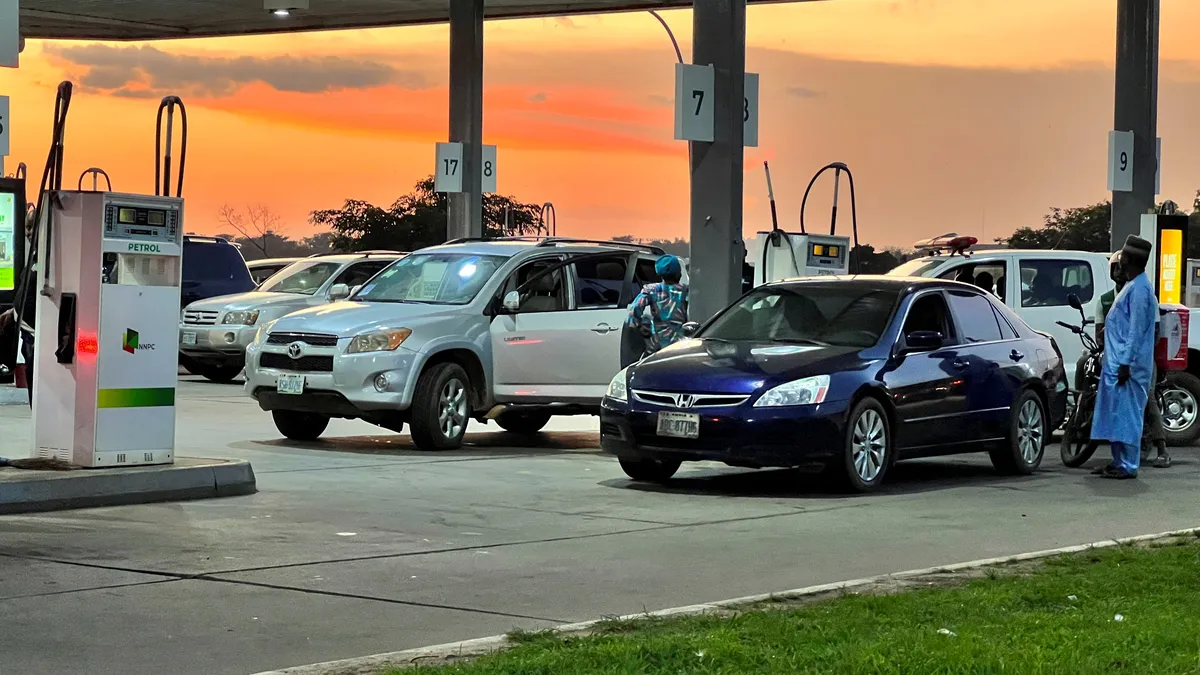
Nigerian filling stations lowered petrol prices to N1,365 and N1,375 per litre on May 2, 2026, down from N1,440. The reduction occurred just a day after a significant price hike. This volatility reflects ongoing fluctuations in the global oil market.
Previously, Dangote Refinery had increased ex-depot prices to around N1,275 and N1,290 per litre. Petrol prices in Abuja were reported at N1,364 per litre following the increase. Yobe recorded the highest petrol price at N1,395 per litre while Lagos saw an increase from N1,230 to N1,320.
Key facts:
- The price reduction was a response to the previous hike in petrol prices.
- Northern states generally recorded higher petrol prices compared to southern states.
- The increase in petrol prices is linked to rising global crude oil prices.
Fuel inflation remains a concern for Nigeria as the country depends heavily on international energy prices. The federal government has stated it is reviewing the possible economic implications of the crisis and stands ready to adjust policy if necessary. Officials noted that Nigeria faces higher domestic energy costs without a corresponding increase in export revenue.
Petrol continues to play a critical role in Nigeria’s economy. It powers transport, logistics, private electricity generation, and distribution networks. Observers expect continued adjustments in pricing as global oil prices fluctuate.