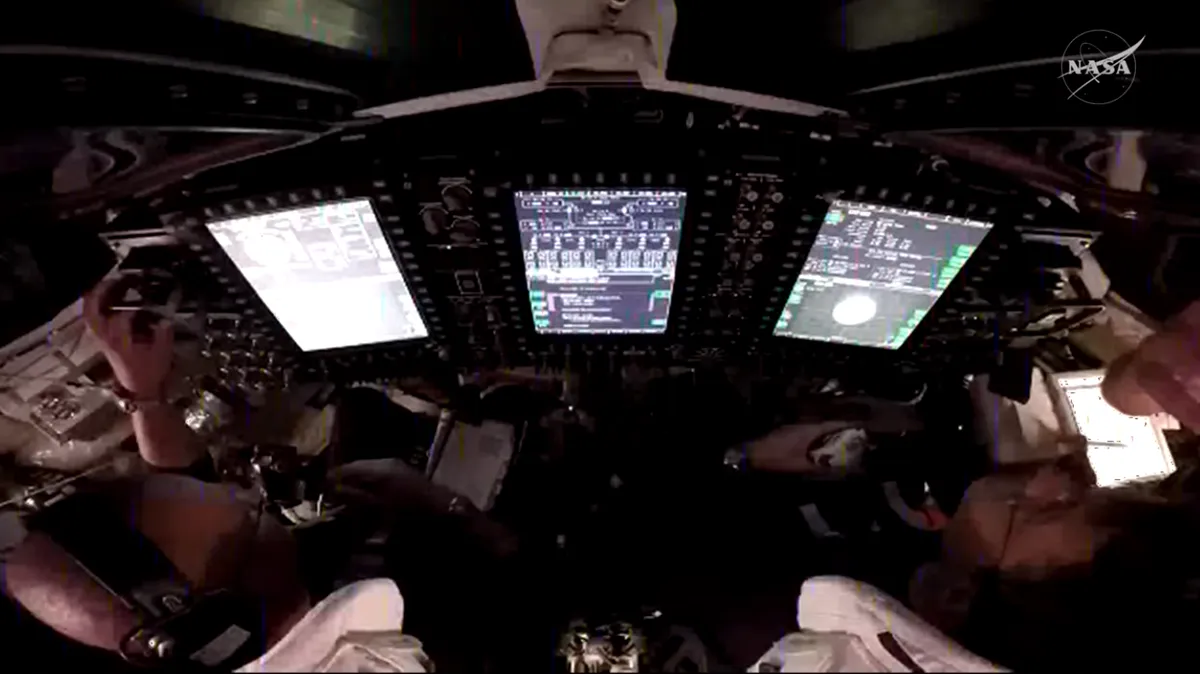
NASA’s Artemis II mission is gearing up for a historic launch, scheduled for April 1, 2026. This mission will carry four astronauts: Reid Wiseman as commander, Victor Glover as pilot, and Christina Koch and Jeremy Hansen as mission specialists. The launch window opens at 6:24 PM EDT (22:24 GMT), with an 80% chance of favorable weather conditions.
Artemis II marks the first human mission of the Artemis program and is significant as it will be the first time in over 50 years that astronauts will travel around the moon. The mission will not land on the lunar surface but will perform a lunar flyby, allowing the crew to evaluate the spacecraft and conduct medical and scientific experiments.
For the first time since 1972, humans will venture beyond low Earth orbit, testing deep-space life-support systems aboard the Orion spacecraft. This mission is a crucial step towards NASA’s long-term goal of establishing a sustained human presence on and around the moon, which is seen as a stepping stone for future human missions to Mars.
The Artemis program consists of five missions: Artemis I, II, III, IV, and V. Artemis II will specifically test the Orion spacecraft’s life support systems, navigation, communication links, and overall performance in deep space with a crew on board.
Victor Glover, who is the first Black astronaut assigned to a lunar mission, expressed excitement about the journey, stating, “Trust us you look amazing, you look beautiful, and from up here you also look like one thing…you’re all one people.” Meanwhile, Christina Koch holds the record for the longest single spaceflight by a woman at 328 days.
Jeremy Hansen will also make history as the first Canadian astronaut to travel to the moon. The mission reflects broader long-term goals of international collaboration in space exploration.
The countdown is already underway at Kennedy Space Center, with preparations intensifying as the launch date approaches. NASA aims to ensure that all systems are ready for this landmark mission.
As the Artemis II mission draws nearer, the excitement within the space community continues to build, with many looking forward to the advancements in space exploration that this mission will bring.