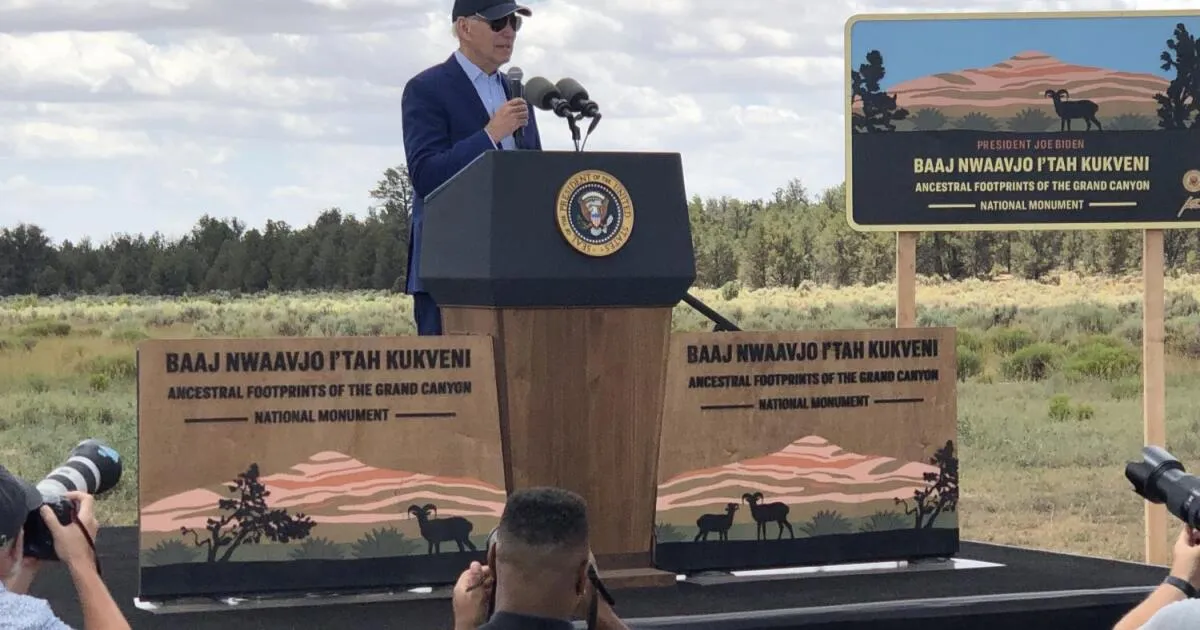
The lawsuit aimed to overturn a national monument designation made by President Joe Biden in 2023. The 9th U.S. Circuit Court of Appeals upheld a lower district court’s decision to dismiss the lawsuit, which was filed in 2024 by Mohave County, Colorado City, the town of Fredonia, and Arizona Treasurer Kimberly Yee.
The lawsuit challenged Biden’s use of the Antiquities Act to set aside almost a million acres for a national monument, specifically the Baaj Nwaavjo I’tah Kukveni area. This designation prohibits mining within the protected area, a decision that has drawn criticism from local officials.
Plaintiffs argued that the ban on mining would lead to significant financial losses, claiming injuries in the form of lost tax revenue from uranium mining. However, the appeals panel affirmed the dismissal on all counts, effectively allowing Biden’s designation to remain in place.
Senator John Kennedy expressed his discontent with the Biden administration, stating, “I do not hate anyone. I look for grace wherever I can find it, so I say this gently: the Biden administration sucks…President Biden has been spectacularly awful.” His remarks reflect the sentiments of some GOP members who have opposed the monument designation.
A Trump administration official also weighed in, comparing the situation to “listening to Joe Biden speak,” indicating a broader critique of Biden’s policies. These comments highlight the ongoing political tensions surrounding environmental regulations and land use in the region.
In contrast, Arizona Attorney General Kris Mayes praised the court’s decision, stating, “This is just a great day for the 13 different tribes from Nevada, Utah, Colorado, Arizona and New Mexico and the state of Arizona and our nation that wanted to see this beautiful national monument stay in place.” This statement underscores the support for the monument among tribal leaders and environmental advocates.
The ruling is seen as a significant victory for those who favor conservation efforts in the Grand Canyon area. Observers note that this decision may influence future land use policies and the ongoing debate over resource extraction versus environmental protection.
As the situation develops, it remains to be seen how local governments and the GOP will respond to the upheld designation and what implications it may have for future legislation regarding national monuments.