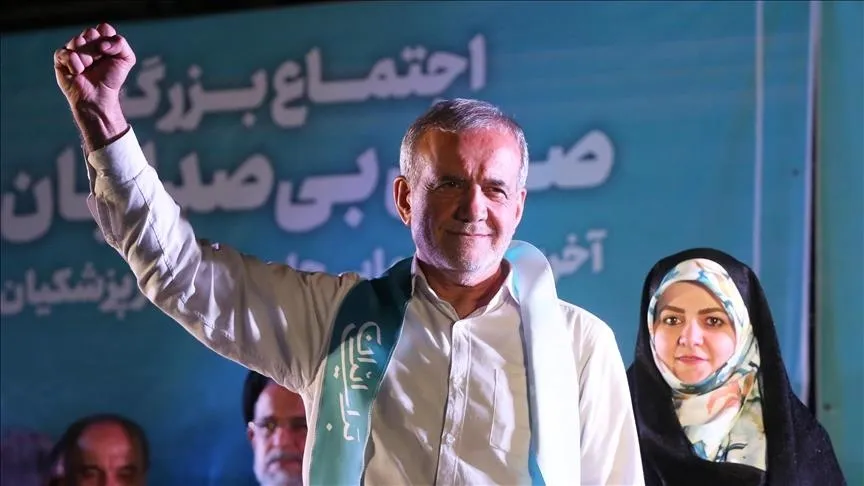
Iranian President Masoud Pezeshkian Announces New Policy
In a pivotal announcement made on March 7, 2026, Iranian President Masoud Pezeshkian declared that Iran will cease military operations against its neighbouring countries unless these nations initiate attacks. This statement comes in the wake of escalating tensions in the region, particularly involving the United States and Israel.
Pezeshkian’s remarks were accompanied by an apology directed at neighbouring countries for previous strikes carried out by Iran. He acknowledged the impact of these actions and emphasized the need for a more restrained approach moving forward. “From now on, no attack neighbouring kontris unless dem attack first,” he stated, highlighting a shift in Iran’s military strategy.
The decision was ratified by Iran’s interim council, which approved a resolution aimed at halting attacks on neighbouring nations. This policy change is particularly significant given the recent history of Iranian military engagements, which have included strikes against countries such as Saudi Arabia, the UAE, Qatar, Bahrain, and Oman.
Currently, the Strait of Hormuz, a critical maritime route through which approximately 20 percent of the world’s oil passes, remains closed due to threats of strikes from Iran. This closure has resulted in severe disruptions, with the International Maritime Organisation reporting that 3,000 vessels and 20,000 seafarers are stranded in the Middle East due to the ongoing conflict.
In a related incident, the Islamic Revolutionary Guard Corps (IRGC) targeted an oil tanker named Prima in the Gulf after it ignored warnings. Such actions have contributed to heightened tensions in the region, prompting the need for a reassessment of Iran’s military posture.
Dubai International Airport has also suspended all operations due to the ongoing attacks, further illustrating the far-reaching consequences of the conflict. The situation remains precarious, with six US troops reported killed in the war and 1,300 Iranians having lost their lives in US-Israeli attacks within the first week of hostilities.
In light of these developments, Pezeshkian’s administration is attempting to navigate a complex geopolitical landscape. The IRGC has reiterated its commitment to respecting the interests and national sovereignty of neighbouring countries, stating, “Following the statements of the president, the armed forces once again declare that they respect the interests and national sovereignty of neighbouring countries.” This statement aims to reassure regional partners amidst ongoing tensions.
As Iran seeks to redefine its military strategy, the implications of this policy shift will be closely monitored by both regional and global stakeholders. Details remain unconfirmed regarding the long-term impact of these changes on Iran’s relationships with its neighbours and the broader geopolitical dynamics in the Middle East.