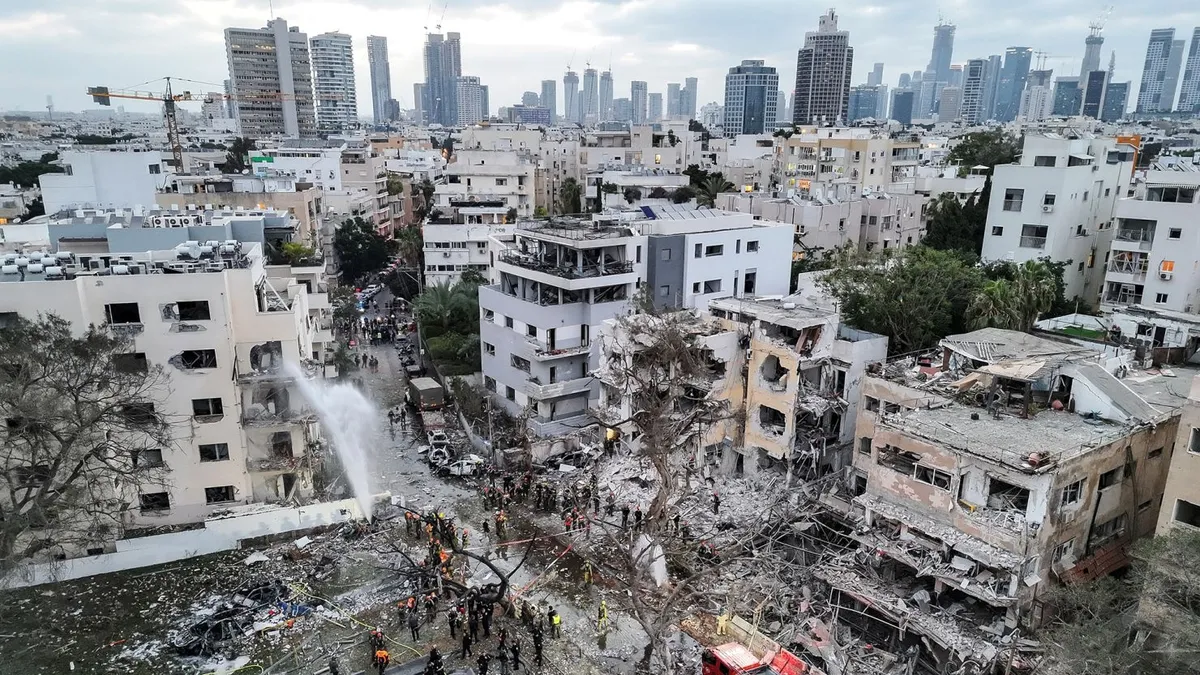
The Iran-Israel war has escalated dramatically, resulting in over 3,000 deaths across the region. The conflict has drawn in various actors, including Iranian-backed Houthi rebels, who recently claimed a missile launch that was intercepted by Israel. This escalation has raised concerns about further regional instability.
As the war continues, Iranian authorities have reported more than 1,900 deaths within Iran, while 19 individuals have been reported dead in Israel. The conflict has also claimed over 1,100 lives in Lebanon and resulted in 80 security forces deaths in Iraq. Additionally, 20 people have died in Gulf states due to the ongoing violence.
Iran has fired missiles toward Israel, prompting the U.S. to strike more than 11,000 Iranian targets since the conflict began. U.S. Secretary of State Marco Rubio indicated that the U.S. expects to achieve its objectives in the war within the next couple of weeks, emphasizing that ground troops are not necessary for success.
In a warning from Iranian Foreign Minister Abbas Araghchi, Tehran stated it would exact a “heavy price” for Israeli attacks on its nuclear sites. This rhetoric underscores the heightened tensions and the potential for further escalation.
The Houthi rebels have threatened to enter the conflict if attacks on Iran persist or if additional countries join the fray. This warning adds another layer of complexity to the already volatile situation.
Saudi Arabia has also been drawn into the conflict, successfully intercepting and destroying a missile targeting Riyadh, which highlights the regional implications of the war.
As of now, U.S. Marines have arrived in the region, with 2,500 personnel deployed and over 300 service members reported wounded. The situation remains fluid, with 13 U.S. service members reported killed and 12 wounded in an Iranian attack on a military airbase.
Details remain unconfirmed regarding the full extent of casualties and the impact on global shipping routes, as diplomatic efforts to resolve the conflict are ongoing but face skepticism from Iran.
The international community watches closely as the situation develops, with significant implications for regional stability and global energy markets.