What observers say
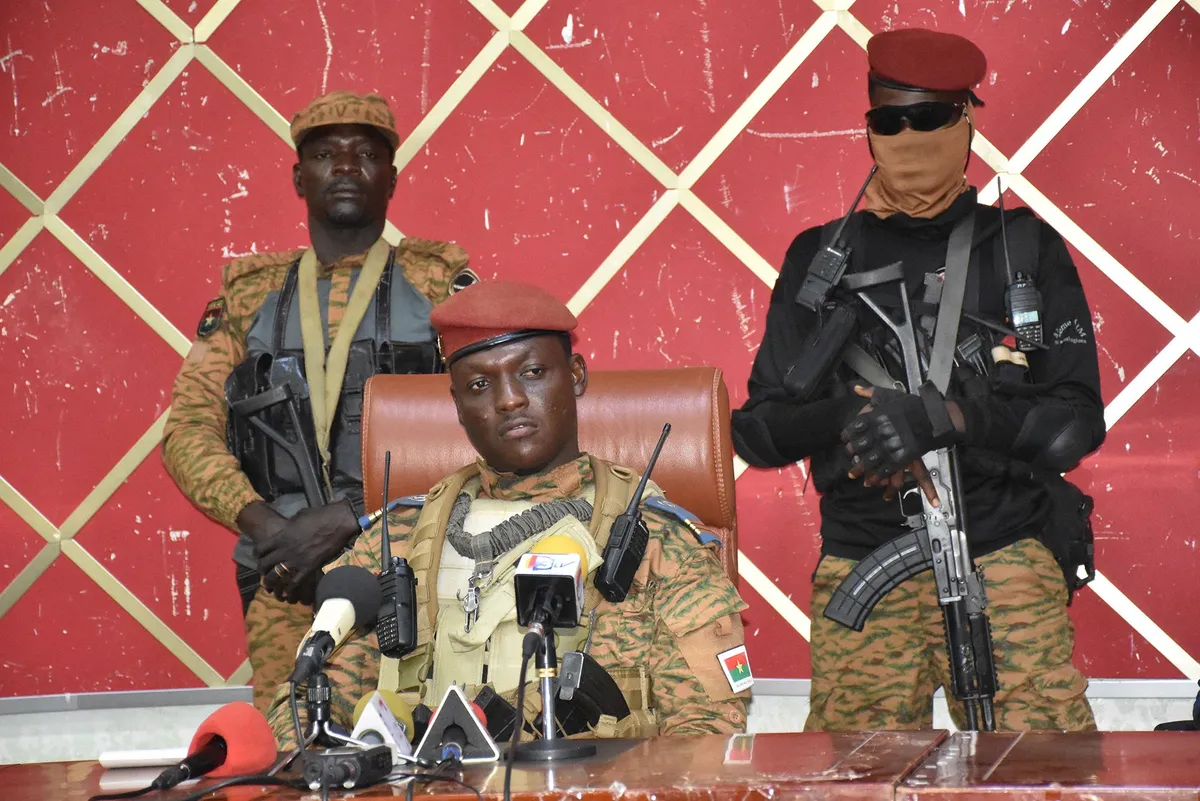
“People need to forget about the issue of democracy. Democracy no be for us,” stated Ibrahim Traoré, the military leader of Burkina Faso, during a recent address. This statement underscores a significant pivot in the governance of the country, which has been under Traoré’s rule since he took power in a coup in September 2022.
Traoré’s rise to power came amid a backdrop of escalating violence and instability in Burkina Faso, which has been grappling with a jihadist insurgency since 2014. The conflict has resulted in the deaths of more than 1,800 civilians since Traoré’s takeover, with fatalities tripling to 17,775 by May 2025. The insurgency has also displaced approximately 2.1 million people, creating a humanitarian crisis.
Initially, Traoré had promised to restore democratic rule by July 2024. However, in January 2026, he banned all political parties, effectively consolidating his power and extending military rule for another five years. This move has drawn criticism from various human rights organizations, including Human Rights Watch, which reported that the junta and allied militias have committed crimes against humanity.
In his remarks, Traoré further claimed, “Democracy kills,” suggesting that the democratic systems imposed by Western powers lead to violence and instability. He pointed to Libya as a cautionary example, stating, “Look Libya, dat na example wey dey close to us.” His anti-Western rhetoric has resonated with segments of the population, contributing to his growing support.
Details remain unconfirmed regarding the exact implications of Traoré’s statements on the future of governance in Burkina Faso. However, the junta’s actions since his takeover have raised alarms about the state of civil liberties in the country. Reports indicate that Traoré’s government has targeted journalists and political opposition leaders, further stifling dissent.
As Burkina Faso continues to navigate the complexities of its security situation, the international community watches closely. The junta’s approach to governance and its stance on democracy will likely influence not only the internal dynamics of the country but also its relationships with foreign powers.
With Traoré extending his rule until 2029, the prospect of elections appears increasingly distant. Observers are concerned about the implications for human rights and the potential for further violence as the government consolidates its power and suppresses opposition.