“Holy Week is a very special week for the Catholic Church and the Christian world in general,” stated Very Rev. Fr. Anthony Godonu, emphasizing the significance of this sacred time.
Holy Week is a period set aside by the Catholic Church and the broader Christian community to prepare for Easter, commemorating the passion, death, and resurrection of Jesus Christ. It begins with Palm Sunday, which recalls Jesus’ triumphant entry into Jerusalem.
Following Palm Sunday, Holy Thursday celebrates the institution of the priesthood and the Eucharist during the Mass of the Last Supper. This event is pivotal as it marks the beginning of the events leading to Jesus’ crucifixion.
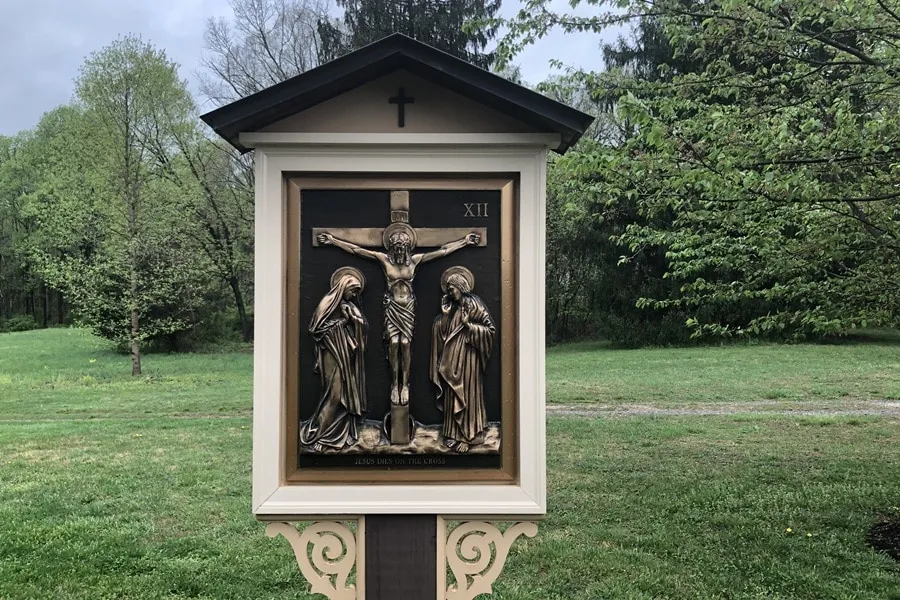
Good Friday is a solemn day that focuses on the suffering and death of Jesus. Observances include the Stations of the Cross and the veneration of the cross, allowing believers to reflect on the sacrifices made for salvation.
As Fr. Godonu noted, “Jesus was now prepared to take on headlong his own passion, which will lead to his death and subsequently his resurrection.” This encapsulates the essence of Holy Week, as it is a time for Christians to remember the trials Jesus endured.
The culmination of Holy Week is the Easter Vigil, a grand celebration that transitions into Easter Sunday, marking the resurrection of Jesus and the promise of eternal life.
In a recent statement, Pope Leo XIV urged clergy to refrain from using artificial intelligence for homilies, asserting that “To give a true homily is to share faith,” and that “AI will never be able to share faith.” This highlights the importance of personal connection in religious teachings.
Despite the Pope’s concerns, AI-generated religious content has gained traction on social media, attracting thousands of views and shares, indicating a growing interest in digital expressions of faith.
As Holy Week progresses, many anticipate how these discussions around faith and technology will evolve, particularly in the context of traditional religious observances.
Details remain unconfirmed regarding the impact of AI on religious practices, but the dialogue continues as communities navigate the intersection of faith and technology.