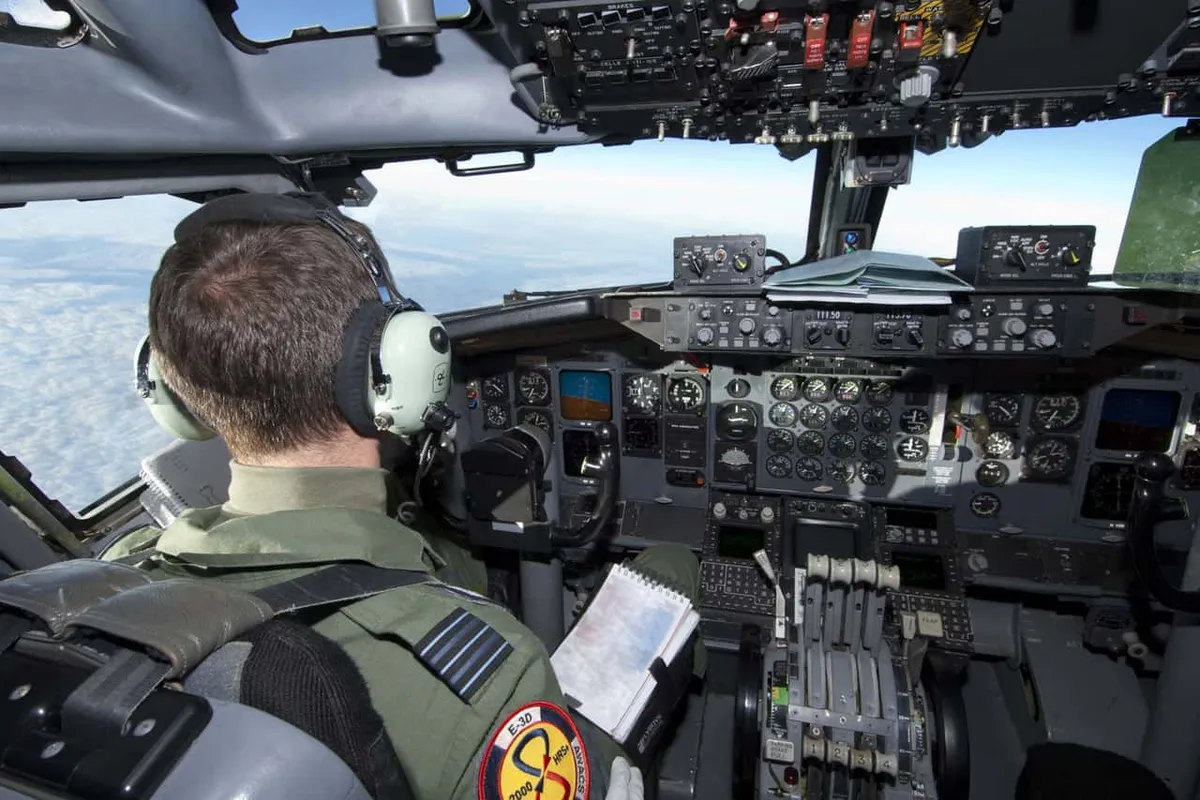
On March 30, 2026, an E-3 Sentry aircraft was destroyed during an Iranian strike on Prince Sultan Air Base in Saudi Arabia. This incident occurred amidst escalating tensions in the region, particularly following Iran’s targeting of US assets since the onset of the war on February 28.
The E-3 Sentry, a vital component of US military operations, has been in service since 1978 and is based on the Boeing 707 commercial airframe. It provides all-altitude and all-weather surveillance of the battle space, capable of tracking around 600 targets simultaneously with a radar range exceeding 375 kilometers (approximately 250 miles).
The destruction of the E-3 Sentry is viewed as a serious blow to US surveillance capabilities. Cedric Leighton, a military analyst, emphasized that “the loss of the AWACS is a serious blow to (US) surveillance capabilities.” This incident raises concerns about the vulnerability of US military assets in the region.
At least 10 US service members were reported injured during the attack, although details remain unconfirmed. The US Air Force currently operates a fleet of 17 E-3 Sentry aircraft, which are critical for managing battle space and tracking various threats, including drones and missiles.
Retired US Air Force Colonel John Venable noted the significance of targeting the E-3G AWACS, stating, “Targeting the E-3G AWACS in particular is a big deal.” Kelly Grieco, another military expert, pointed out that Iran is focusing on eliminating key assets that support US operations, including radars and tankers.
The US Air Force has been exploring replacements for its aging E-3 fleet, highlighting the ongoing need for advanced surveillance technology in modern warfare. The loss of this aircraft underscores the challenges faced by US forces in maintaining effective surveillance and response capabilities in the Gulf region.
As the situation evolves, the implications of this attack will likely resonate throughout military planning and strategy in the area. The destruction of the E-3 Sentry aircraft not only impacts current operations but also raises questions about future military engagements and the protection of critical assets.