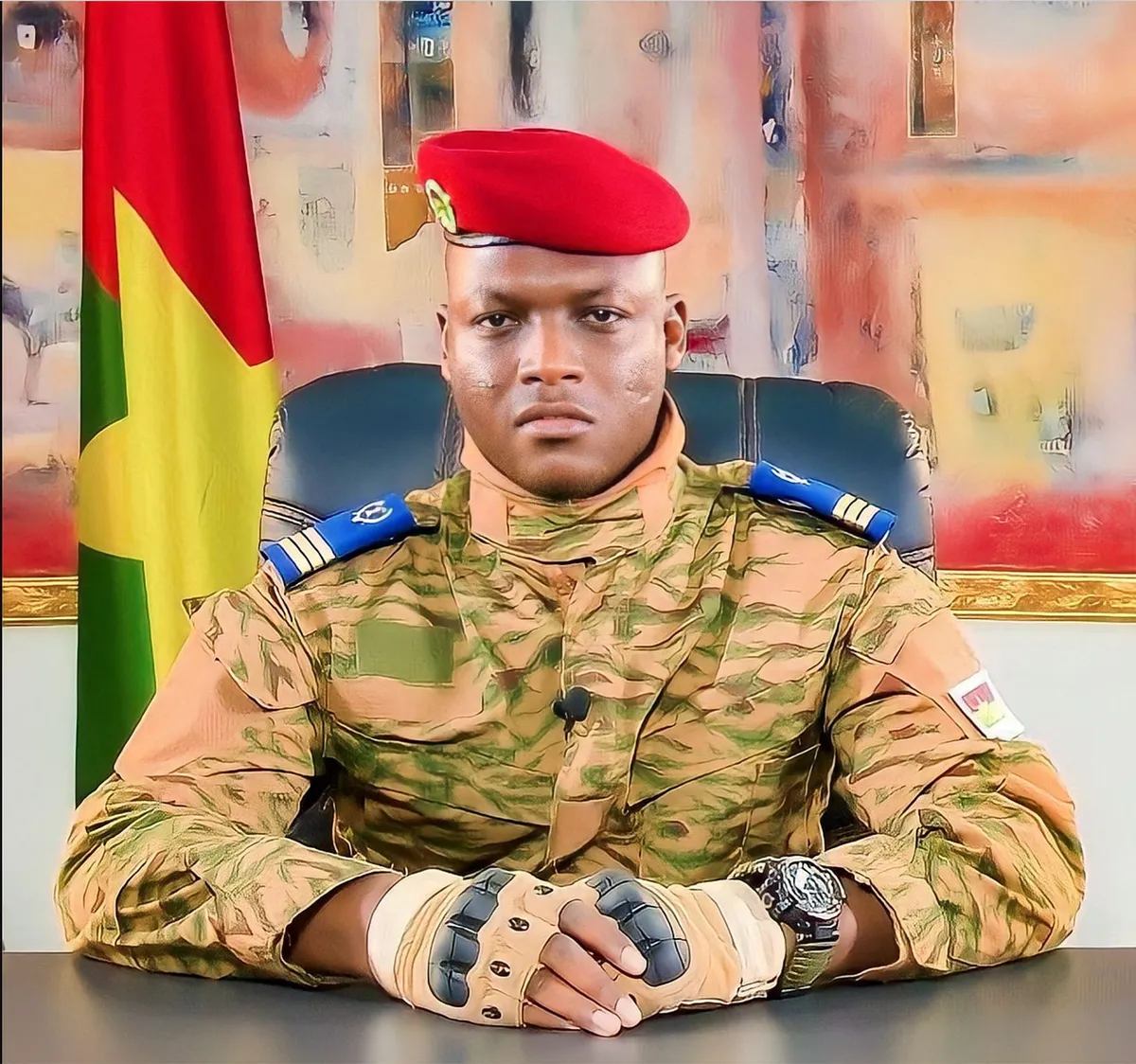
In a significant development, Captain Ibrahim Traoré, the military leader of Burkina Faso, has publicly rejected the concept of democracy, urging citizens to “forget about democracy.” This statement comes as the junta he leads has dissolved political parties and postponed elections indefinitely.
Traoré, who seized power in September 2022 after toppling another junta, emphasized during a televised discussion that “democracy kills,” further asserting, “We would never practise democracy, forget it!” His remarks reflect a broader strategy by the junta to consolidate power amid ongoing security challenges.
The junta’s recent actions have effectively nullified any planned democratic transition, extending the military’s control for an additional five years. This decision follows nearly a decade of jihadist insurgencies that have plagued Burkina Faso, leading to a deteriorating security situation.
Before the coup, Burkina Faso had more than 100 political parties, with 15 represented in parliament after the 2020 elections. The current regime’s dissolution of these parties marks a significant shift in the political landscape of the country.
In addition to the dissolution of political parties, the junta has restricted international media access and expelled journalists, raising concerns about freedom of the press in the country. The United Nations has condemned these moves, highlighting the implications for political discourse and civil liberties.
Traoré’s government has framed its consolidation of power as a necessary response to the ongoing security crisis, arguing that traditional democratic practices are incompatible with the current situation. This narrative has been met with skepticism both domestically and internationally.
Reactions to Traoré’s statements have been mixed, with some citizens expressing support for the military’s approach to governance, while others fear the loss of democratic freedoms. The international community continues to monitor the situation closely, with calls for a return to democratic norms.
As Burkina Faso navigates this complex political landscape, the future of democracy in the country remains uncertain. Details remain unconfirmed regarding the junta’s long-term plans for governance and the potential for future elections.