Introduction
Luxembourg, a landlocked country in Western Europe, is notable not only for its size but also for its significant role in European affairs and global finance. Nestled between Belgium, France, and Germany, Luxembourg boasts a rich historical heritage and a vibrant culture that draws numerous expatriates and tourists alike. Understanding its importance can offer insights into Europe’s political, economic, and cultural landscape.
Political Landscape
Luxembourg is a founding member of the European Union (EU) and plays a crucial role in EU policymaking and administration. The country is home to several key EU institutions, including the Court of Justice of the European Union and the European Investment Bank. This political significance amplifies Luxembourg’s voice in international diplomacy, making it a central hub for discussions concerning European policies and regulations.
Economic Influence
Economically, Luxembourg is one of the richest countries in the world based on GDP per capita. Renowned for its highly developed finance sector, Luxembourg operates as a premier banking and investment center, attracting firms and wealthy individuals from across the globe. Recent statistics from the Ministry of the Economy indicate that the country’s financial sector contributes significantly to its national GDP, showcasing the stability and resilience of its economy, even amid global financial fluctuations.
Cultural Richness
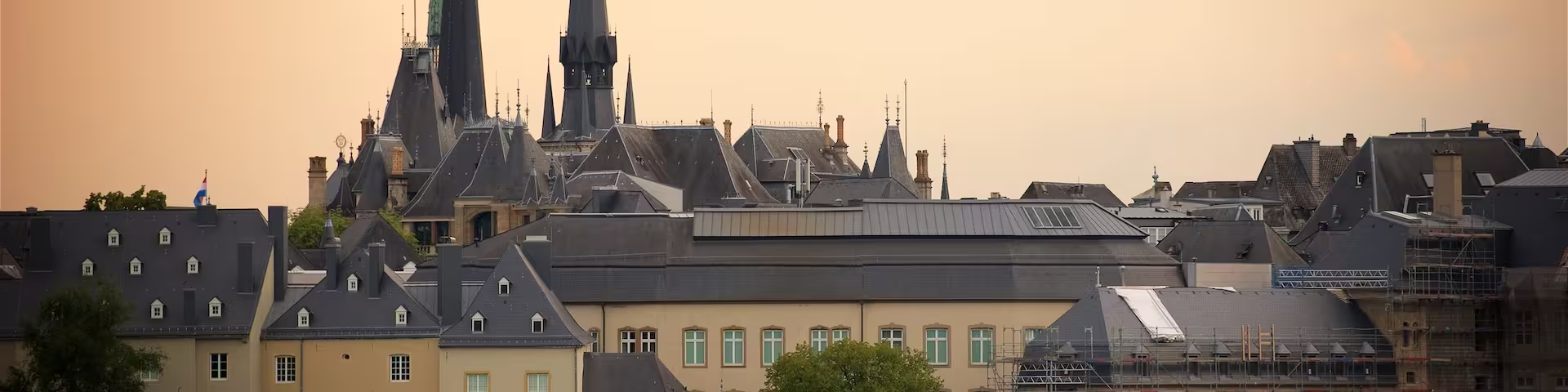
Culturally, Luxembourg offers a blend of various traditions due to its unique geographical positioning. With three official languages — Luxembourgish, French, and German — the country reflects a rich tapestry of influences. Events such as the Luxembourg City Film Festival and the Schueberfouer (a traditional fair) highlight the country’s vibrant cultural scene. Additionally, UNESCO recognizes several sites in Luxembourg for their historical significance, including the Old Quarter of Luxembourg City and the Fortifications.
Conclusion
As Luxembourg continues to navigate a rapidly changing global landscape, its role as a beacon of stability and growth within Europe remains significant. Analysts forecast that its influence will only expand as it adapts to new challenges, such as digital transformation and sustainability efforts. For readers interested in global affairs, understanding Luxembourg’s multifaceted contributions provides important context for the future of Europe. In an era where small nations can wield considerable power, Luxembourg stands as a testament to the idea that size does not diminish impact.