Introduction
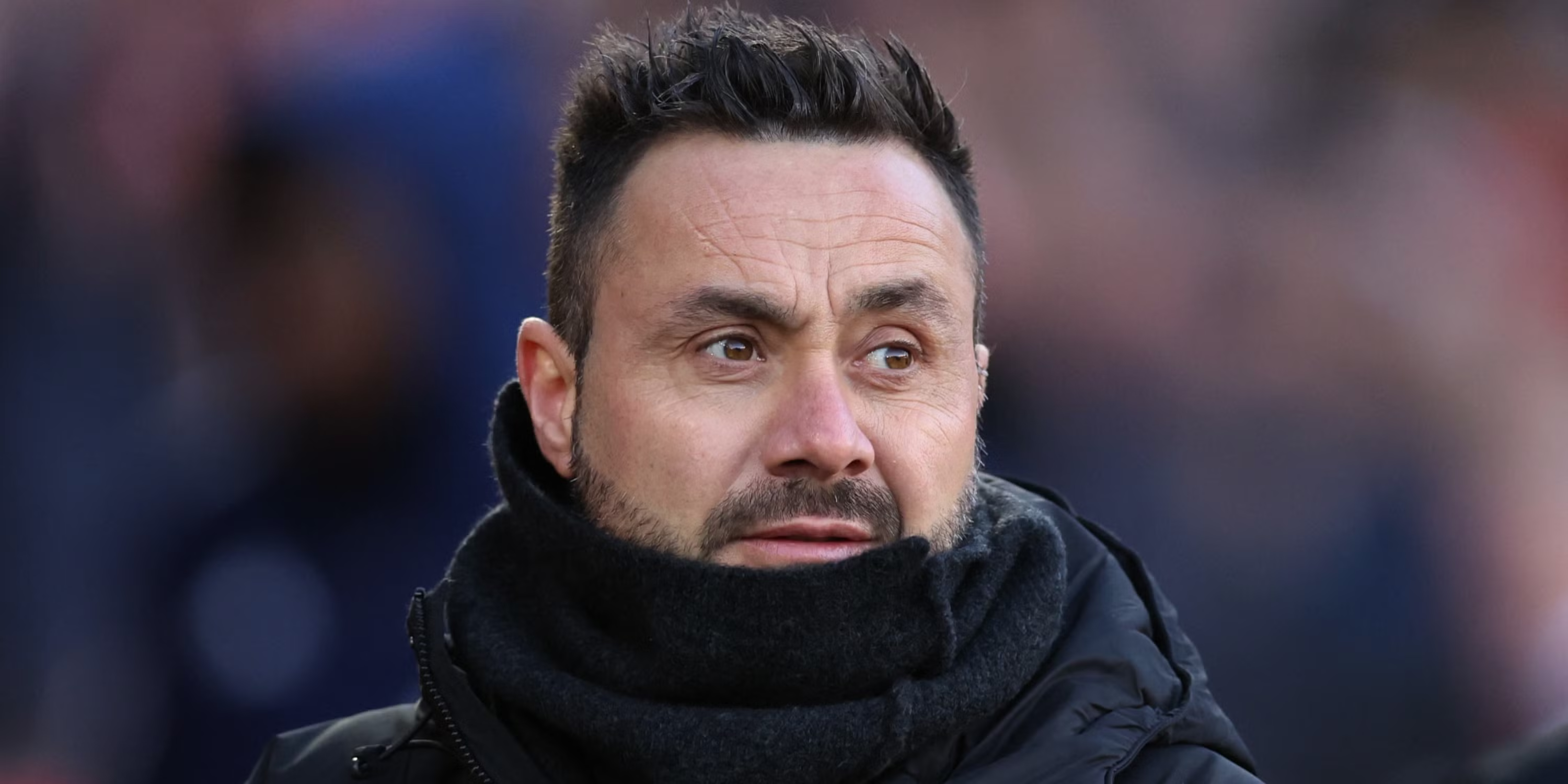
Roberto De Zerbi has emerged as one of the most talked-about football managers in the Premier League. His philosophy and tactical approach are reshaping how teams play, prompting discussions about the future of coaching in football. De Zerbi’s success with Brighton & Hove Albion has sparked interest not just within England but globally, as clubs look for innovative ways to enhance their performances on the pitch.
De Zerbi’s Coaching Journey
Born in Brescia, Italy, in 1979, Roberto De Zerbi began his career as a professional football player before transitioning to management. His first significant role came with Italian club Foggia, leading them to promotion in the 2015-16 season. De Zerbi garnered attention for his spell at Sassuolo, where he implemented an attacking philosophy that saw players thrive and the team finish in the top half of Serie A.
In 2022, De Zerbi took the reins at Brighton, succeeding Graham Potter. The challenge was to maintain the club’s upward trajectory in the league while adapting to a new style of play. His emphasis on possession-based football and pressing has captivated fans and pundits alike.
Impact at Brighton
Under De Zerbi’s guidance, Brighton has enjoyed a remarkable start to the season, sitting among the top positions in the Premier League. Notably, he has been credited with developing young talent and maximizing the potential of key players such as Kaoru Mitoma and Evan Ferguson. His tactical versatility allows him to adapt to various opponents, often employing unique formations that confuse traditional defensive setups.
In recent matches, Brighton has showcased a high-intensity pressing game combined with flair in attack, making them one of the most exciting teams in the league to watch. This has led to improved results, with fans expressing renewed optimism about the team’s chances of qualifying for European competitions.
Conclusion
Roberto De Zerbi’s innovative approach to football management is starting to reshape not only Brighton & Hove Albion but could influence coaching strategies across Europe. His ability to integrate players into a cohesive and dynamic unit showcases the significance of modern tactics in professional football. As the season progresses, all eyes will be on De Zerbi to see if his methods can lead Brighton to continued success, potentially making him a key figure in the sport for years to come. The evolution of his coaching style may very well inspire a new generation of tacticians in football.