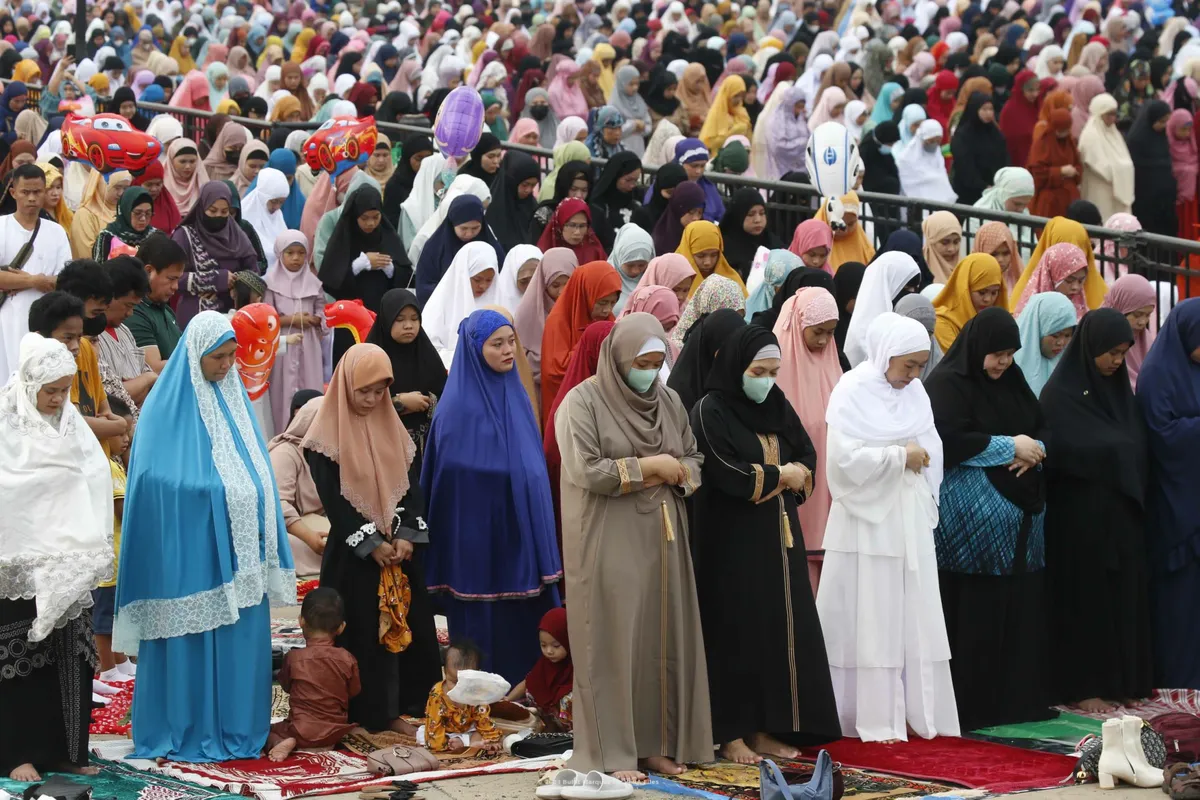
“Eid-el-Fitr, meaning ‘festival of breaking the fast,’ is one of the most important feasts in Islam,” stated a representative from the Nigerian Supreme Council for Islamic Affairs (NSCIA). This year, the Federal Government of Nigeria has declared Thursday, March 19, and Friday, March 20, 2026, as public holidays to mark the occasion.
The announcement was made by the Minister of Interior, Olubunmi Tunji-Ojo, who emphasized the significance of the holiday following the holy month of Ramadan. “The Minister urged Muslims to sustain the virtues of love, generosity, peace, tolerance, and sacrifice emphasised during the holy month,” the statement noted.
Eid-el-Fitr signifies the end of Ramadan, a month during which Muslims fast from dawn to sunset, abstaining from food, drink, and other physical needs. The sighting of the Shawwal crescent marks this transition, with the NSCIA directing Muslims to search for the new moon to determine the date of Eid al-Fitr.
As the NSCIA prepares for the moon sighting, they invite all Muslims in Nigeria to participate in the search on Wednesday, 29th Ramadan 1447 AH. The Sultan of Sokoto, as the spiritual leader of Muslims in Nigeria, plays a vital role in these observances.
In addition to prayers, Eid al-Fitr celebrations typically include feasting and gift-giving, fostering a sense of community and togetherness among families and friends. Zakat al-Fitr, a mandatory charity given to the less privileged before the Eid prayer, is also an important aspect of the festivities.
“The Federal Government remains committed to fostering national unity and peaceful coexistence among all Nigerians,” the Minister stated, urging citizens to pray for peace, unity, and prosperity during this festive period.
As the date approaches, preparations for the celebrations are expected to intensify, with communities coming together to honor the traditions of Eid al-Fitr. The public holidays provide an opportunity for families to gather and celebrate the conclusion of Ramadan.
Details remain unconfirmed regarding any additional events or activities planned for the Eid celebrations, but the focus remains on the spiritual and communal aspects of this significant occasion.