Abubakar Malami, a prominent figure in Nigerian politics, has recently been released on bail following serious allegations against him, including terrorism financing and illegal firearms possession. His legal troubles have drawn significant attention, particularly as he is also implicated in an N8.7 billion fraud and money laundering case.
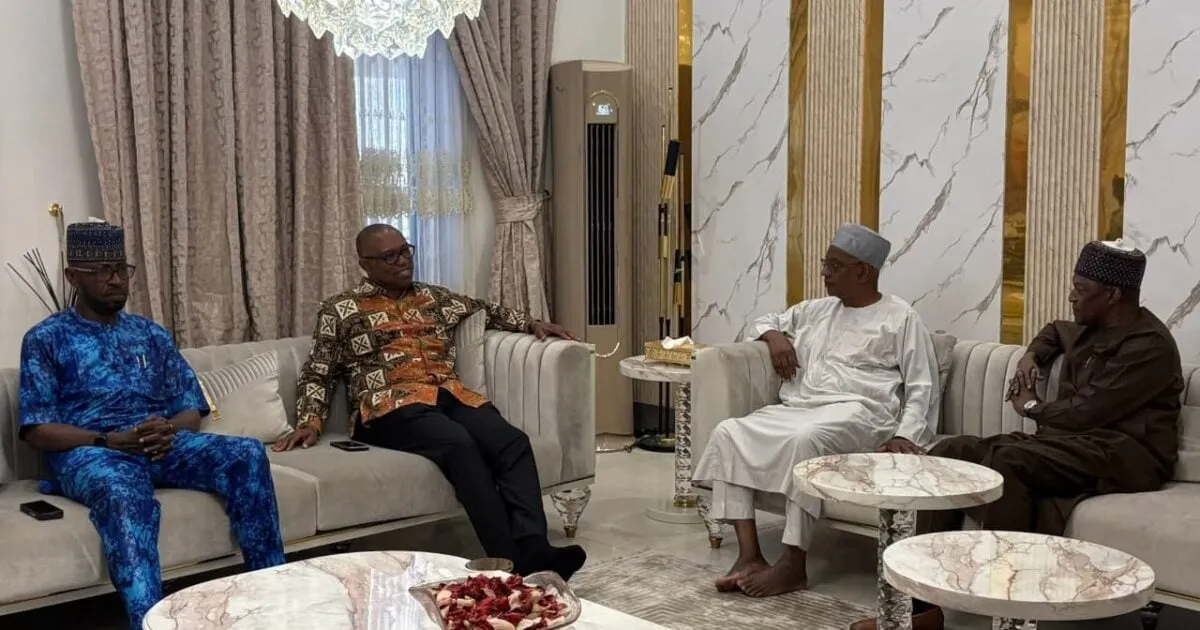
The trial is currently ongoing at the Federal High Court in Abuja, where proceedings were adjourned to April 20 for continuation. Just 24 hours after his release on bail on March 17, 2026, Malami received a visit from Peter Obi, the leader of the African Democratic Congress, who expressed his support amidst the ongoing legal challenges.
Obi’s visit was characterized as an act of solidarity, highlighting the political ramifications of Malami’s situation. During their meeting at Malami’s residence, Obi voiced concerns over the recent arrests of key leaders from the African Democratic Congress, indicating a broader context of political instability.
In a statement, Obi emphasized the importance of upholding the rule of law in Nigeria, stating, “The integrity of the rule of law in Nigeria is non-negotiable; its degradation undermines our economic development and threatens national stability.” This remark underscores the stakes involved not only for Malami but for the political landscape in Nigeria as a whole.
Malami has faced harassment and detention in recent times, which has intensified scrutiny over his actions and the charges against him. The Economic and Financial Crimes Commission (EFCC) and the Department of State Services (DSS) have been involved in the investigations surrounding his case.
Details remain unconfirmed regarding the specific discussions that took place during the meeting between Obi and Malami, leaving some uncertainties about the future implications of their interaction. The political dynamics in Nigeria continue to evolve as these legal proceedings unfold.
As the trial progresses, the outcomes could have significant repercussions for both Malami and the broader political environment in Nigeria. Observers are keenly watching how this situation develops, particularly in light of the ongoing challenges faced by the African Democratic Congress.
With the next court date set for April 20, the legal battles are far from over, and the implications of Malami’s case will likely resonate throughout the political sphere.